
There are experiences in life that change everything we once knew. They alter the way we see ourselves, our future and the world around us.
For me, losing Matt was one of those experiences.
He was my husband, but not just my husband, he was my soulmate, and the person I believed I would grow old with. We had created a beautiful life together, he was my life, filled with love, laughter and the dreams for our future. We laughed every day and shared a connection that was unlike anything I had ever experienced before.
Our relationship went far beyond the physical. There was an energetic and soul connection between us that felt incredibly deep and powerful. We understood each other in a way that is difficult to put into words.
Then, suddenly, everything changed.

When Your Mind Cannot Understand What Has Happened
One of the most painful parts of my grief was trying to come to terms and understand my reality.
I had left home with Matts flipflops in my hands, sitting beside him, never imagining that I would return without him. Having to travel home alone that night and realising I had to telephone his family to explain what had happened felt heart wrenching and impossible. Infact at that time I was in shock and unable to explain with any tact.
At that time, my mind simply could not comprehend it all.
It was as though I was no longer fully inside my own body. Part of me was present, doing what needed to be done, while another part of me felt completely disconnected from everything that was happening.
My body seemed to go into shutdown.
The empty space beside me felt impossible to understand. I kept thinking, “How can he not be here? How can I have left with him and now be returning alone?”
This is what shock and trauma can do. When we experience the sudden loss of someone we love, the nervous system can become completely overwhelmed. The body may move into a fight, flight or freeze response as it attempts to protect us from something that feels too enormous to process.
I felt numb, detached and unable to think clearly. I struggled to make even the smallest decision. It was as though I was watching my own life from somewhere outside of myself.
Grief Lives in the Body Too
Grief does not live only in our thoughts or our hearts. It can affect every part of the body.
I was completely exhausted yet unable to sleep. My chest heavy and tight. My head pounding from crying, tension and emotional overwhelm. My appetite disappeared, and even the thought of food made me feel sick.
Some people experience physical symptoms so intense that they feel as though their heart is literally breaking. There is even a recognised condition commonly known as broken heart syndrome, which can occur after extreme emotional or physical stress.
Grief can make your whole-body ache.
I heard myself cry in a way I’ve have never cried before, like a child, the pain coming from somewhere deep within me. I desperately wanted the throbbing in my head and the intensity inside my body to stop.
Then, without warning, my tears would disappear.
I wondered why I couldn’t cry and started to feel guilty about that too.
The Confusing Waves of Grief
Grief comes in so many different waves, often when we least expect them.
One moment, you may feel completely consumed by sadness. The next, you may laugh at something and immediately feel guilty for experiencing even a second of happiness.
You might suddenly realise that you have not thought about your loved one for a few moments, and guilt rushes in again.
You may feel that you have made a small breakthrough or taken a step forward, only to be pulled backwards by another wave that feels ten times stronger.
This is why grief can be confusing and such a rollercoaster.
It is not one single feeling, and it does not follow a straight line. It can be sadness, disbelief, anger, fear, anxiety, guilt and loneliness, sometimes all existing together.
There is no correct timeline, and there is no right or wrong way to grieve.
Healing is not about moving neatly from one stage to another. Some days you may feel stronger. Other days, getting out of bed or taking a shower may be all you can manage.
That is not failure. That is grief.
You Can Grieve More Than One Loss
Losing Matt did not simply mean losing the person I loved. It meant losing the life I never thought would end.
My routine changed. Our plans disappeared. The future I had imagined was suddenly no longer there.
When someone has been woven into every part of your life, there is no area that remains untouched. You are not only grieving the person. You are grieving your shared routines, conversations, companionship, security, plans, dreams and the future you expected to have together.
There are so many different losses contained within one loss.
At the same time, you are trying to deal with practical responsibilities, return to work, make decisions and find some kind of routine. You are trying to understand who you are now and how you are supposed to continue when everyone else’s life appears to be moving forward and at the same time trying to accept your reality. That was my biggest struggle, acceptance, that he was never coming back, that I was never going to see him again.
People may not know what to say or do around you. Sometimes their discomfort can make you feel even more alone.
You may find yourself wondering:
What am I supposed to do now?
How am I supposed to carry on?
Who am I without the person who was such an important part of everything?
Just give yourself time, don’t make any desions that don’t have to be made and try not to over think, I tried to keep gratitude into my everyday, the love, support, kindness, gifts and messages, as it just made everything just a little bit lighter.
The Importance of Allowing Support
In the beginning, everything can feel like complete turmoil. You may not be able to think clearly, make decisions or even know what you need.
This is why it is so important to accept the support that is offered to you or to ask when you need help.
When people rally around you, allow them to help where they can. You do not need to carry everything alone, and accepting or asking for support does not make you weak.
I was incredibly fortunate to have so much love and support around me. Although no one could understand or process my grief for me, their presence helped me through some of my most difficult days.
Grief can feel deeply isolating, but I want people to know that they don’t have to feel that way because we are never really alone, its all part of the process, just pull on any support.
When we come together and share our experiences, we often discover that many of the emotions we are carrying are also being felt by others. Although every relationship and loss is unique, the feelings surrounding grief can be remarkably similar.
Talking about the person you love can be incredibly therapeutic. Even when it feels difficult, sharing memories, saying their name and reminiscing, can really bring such comfort and keep their spirit alive
Finding People Who Understand
Finding a grief support group or community can make a comforting difference.
I created a grief support community here in Doha because I understand how important it is to have somewhere you can speak openly without feeling awkward, uncomfortable or judged and for me I knew it was part of my much needed healing
Some people may be carrying a more recent loss, while others may have been living with grief for many years. Grief does not simply disappear because time has passed.
Sometimes, you need to be with people who understand.
You need somewhere you can talk about the person you have lost, explain how you are feeling and be met with compassion rather than discomfort.
Within a supportive community, you do not need to pretend that everything is fine. You can be honest about the difficult days and celebrate the small moments when life feels a little lighter.
Learning to Love Myself Through Grief
Although grief becomes part of your story, it does not have to define the rest of your life.
Over time, it can become an opportunity to begin a new chapter—one that you choose to live in your own way.
It takes time to reach that place. In the beginning, you may not be able to imagine any kind of future. You may not know what you want, who you are becoming or how life could ever feel meaningful again.
For me, learning to love myself through grief became essential.
I began to understand that self-love was not selfish, and it was not optional. It was something I needed in order to survive and begin healing.
Self-love during grief does not mean pretending to be positive. It does not mean rushing yourself to move on, hiding your pain or acting as though everything is fine.
It means meeting yourself exactly where you are.
It means acknowledging and validating your feelings instead of judging them. It means giving yourself the same kindness, patience and understanding that you would offer to your closest friend.
We do not always treat ourselves with the same care that we give to the people we love.
If you are grieving while also caring for children, family members or other people, it can be very easy to ignore your own emotions. You may push them aside because everyone else needs you.
But parking your grief is not the same as processing it.
Feelings that are continually pushed down always return, sometimes with even greater intensity. You deserve the time and space to acknowledge what you are going through emotionally, mentally and physically.
What Self-Love Can Look Like During Grief
Self-love may mean resting when your body is exhausted.
It may mean speaking to yourself with kindness rather than criticism.
It can mean asking for help, creating boundaries and recognising that surviving a difficult day is sometimes enough.
It may be taking a shower, stepping outside for a few minutes or eating something nourishing.
Nourishing your body is particularly important because your body is already trying to cope with intense emotional stress and trauma. Even when you do not feel like eating, finding small and manageable ways to give your body what it needs can help support you through those overwhelming emotions.
Self-love can also mean allowing yourself to laugh without feeling guilty.
There is no betrayal in experiencing a moment of happiness after loss. Continuing to live does not mean that you have forgotten the person you love.
It means you are slowly learning to carry that love with you in a different way.
Journaling Became My Lifeline
During the most difficult moments of my grief, writing became a safe place for me.
Journaling gave me somewhere to put the thoughts and emotions that felt too overwhelming to hold inside.
Some days, I wrote pages. On other days, I could only manage a few words.
I wrote letters to Matt. I wrote about my frustration, anger, fear, anxiety and sadness. I allowed everything to come out onto the page without trying to make it sound perfect.
There was no pressure for my writing to be polished. It was just simply honest.
There is something incredibly therapeutic about putting pen to paper. It helped me validate how I was feeling and gave my emotions somewhere to go.
Through journaling, I began to recognise my emotional patterns, preserve precious memories, notice small moments of gratitude and gently reconnect with life.
Writing also allowed me to express my continuing love for Matt while beginning to rediscover myself again.
That experience became the foundation of the Soul Love Journal.
Creating Something From Profound Love and Loss
The Soul Love Journal was born from profound love, loss and my continuing soul connection with Matt.
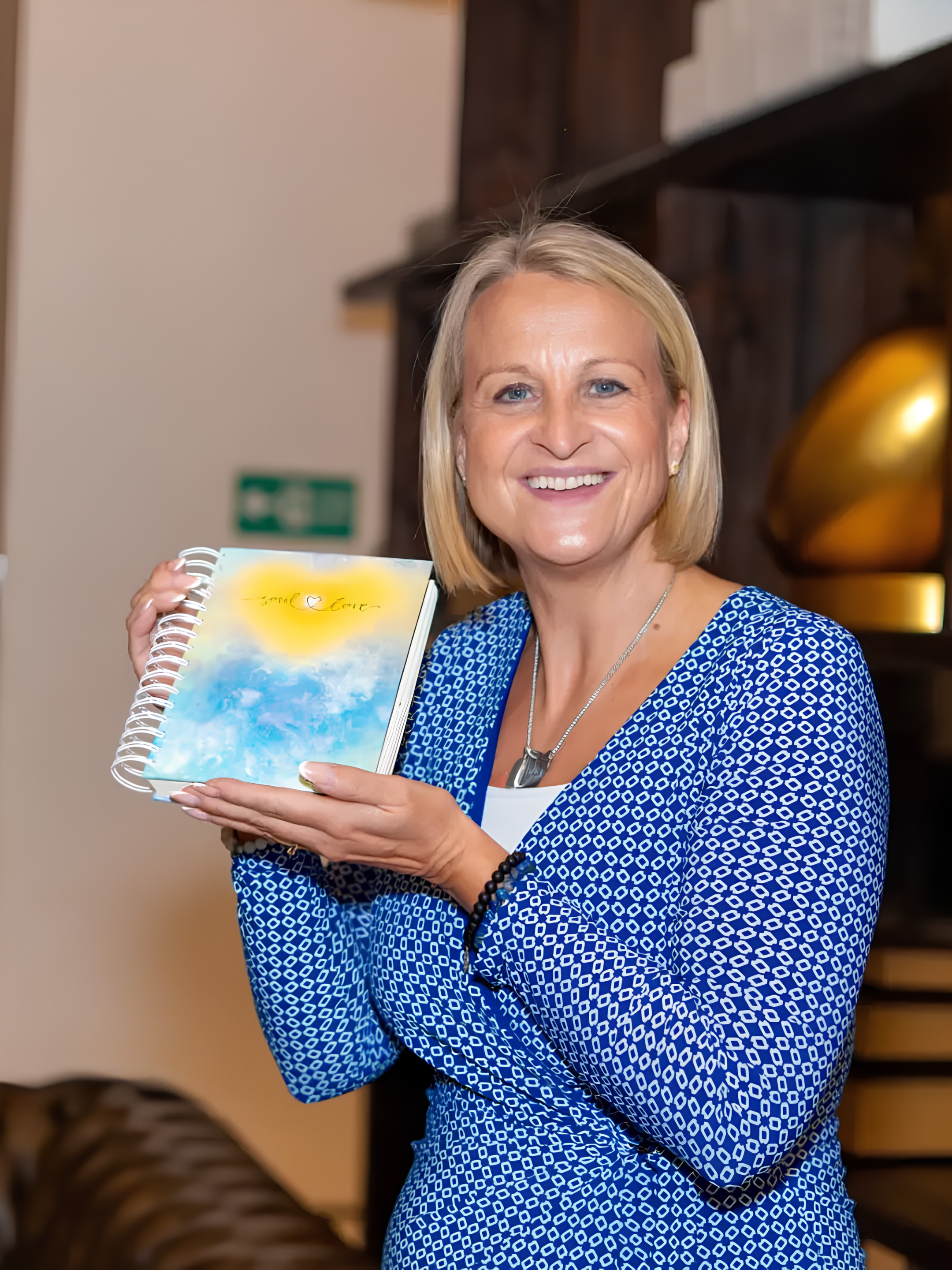
It was created from my own need for somewhere safe to reflect, heal and feel less alone. It is not simply a collection of blank pages. It provides gentle guidance, reflections, affirmations and space to explore your emotions at your own pace.
During some of my deepest days of grief, I also began turning my emotions into phrases and poems.
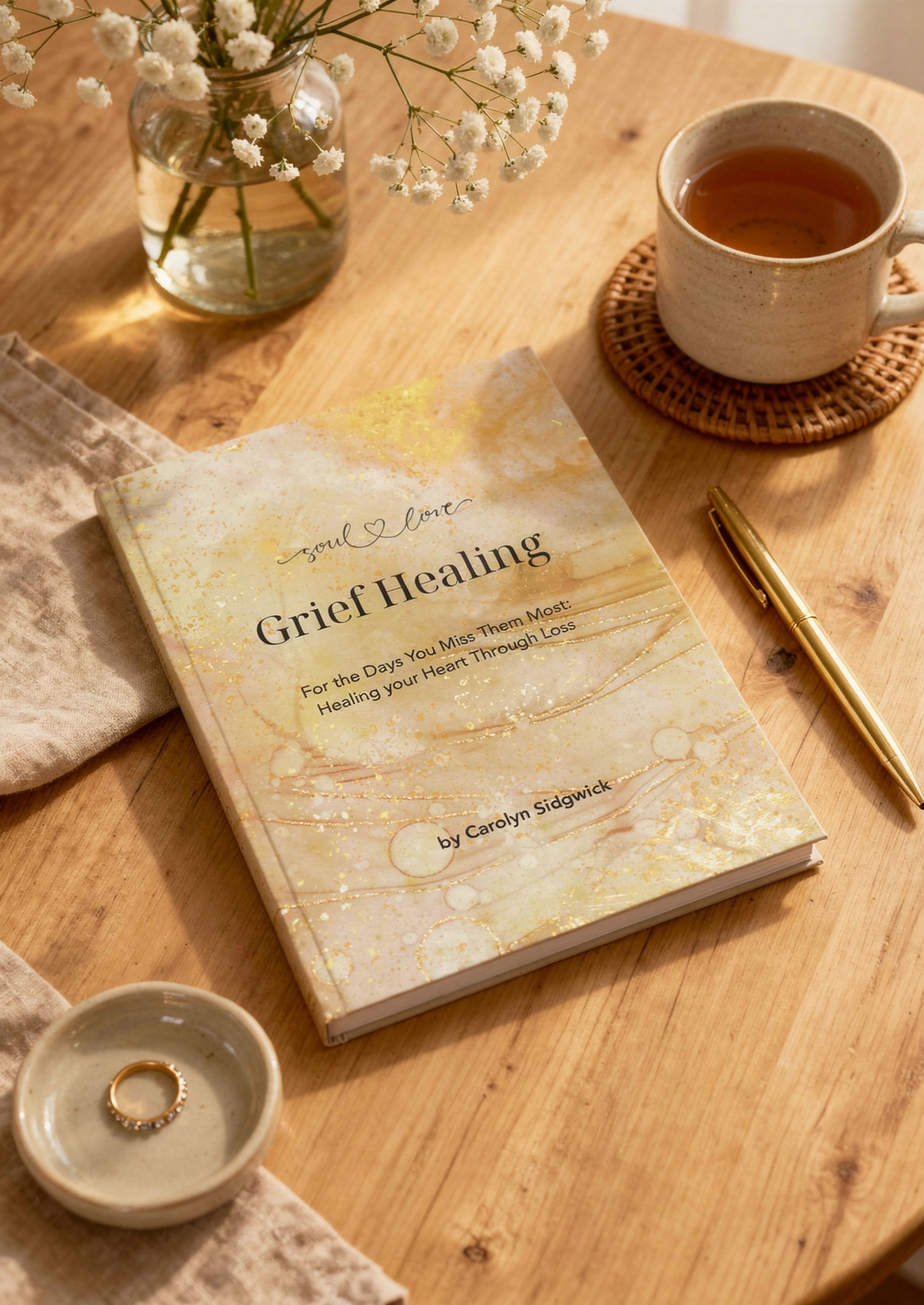
Writing them helped me express feelings that were sometimes impossible to say aloud. Those words later became my Grief Healing Cards and put into a Book, created so that other people could open a page or card, recognise their own feelings and understand that they are not alone.
When someone reads a phrase and thinks, “That is exactly how I feel,” it can bring an enormous sense of validation.
Sometimes, we do not need someone to fix our grief. We simply need to know that somebody understands and that we are not alone.
Building a Life Around the Love
Grief changes your life, but it does not have to define you.
There is no pressure to become the person you were before, because grief changes us. Healing is not about forgetting or leaving your loved one behind.
It is about slowly learning how to build a life around the love that remains.
The memories remain. The connection remains. The love remains.
Through my grief support community and mentorship programmes, I now help others begin gathering the pieces of their lives with guidance, understanding and compassionate support.
My grief mentorship was created to help people feel heard, validated and less alone. It offers a community where people can share openly, explore different ways of healing and receive practical tools to support them through the many layers of grief.
There are many paths towards healing that we may never have considered before. Healing can be found through journaling, connection, meditation, self-love, energy work, sound, creativity, sharing and simply being with people who understand.
You do not have to travel this road alone.
You Are Not Standing Still
Grief can make it seem as though the rest of the world is continuing while you are standing still.
But even on the days when you feel like you are making no progress, you are still moving through something incredibly difficult.
Every breath, every meal, every conversation and every moment you choose to care for yourself matters.
Your grief is not a weakness. It is a reflection of the depth of your love.
Be gentle with yourself. Accept support. Speak about the person you love. Write down the thoughts that feel too heavy to carry. Allow yourself to rest, cry, laugh and feel whatever arrives.
You are not forgetting them by continuing to live.
You are learning to carry their love forward as you begin writing the next chapter of your life.
Because that’s what they want you to do, Live, Love, Laugh and find life again.
Connect With Carolyn and Soul Love
Discover the Soul Love Journal, the Grief Healing Book, healing resources, workshops, grief support and mentorship programmes through the Soul Love website.

The Soul Love Journal
Created by Carolyn Sidgwick as a sanctuary for self-love, reflection, and healing through grief and life’s changing seasons. With 15 guided sections and daily affirmations.
Explore on Amazon
About Carolyn Sidgwick
Founder of Soul Love
Carolyn founded Soul Love in honour of her husband and soulmate, Matt. Through guided journals, healing cards, grief mentorship, and podcasts, she offers compassionate support to help others navigate loss, embrace self-love, and carry love forward.